



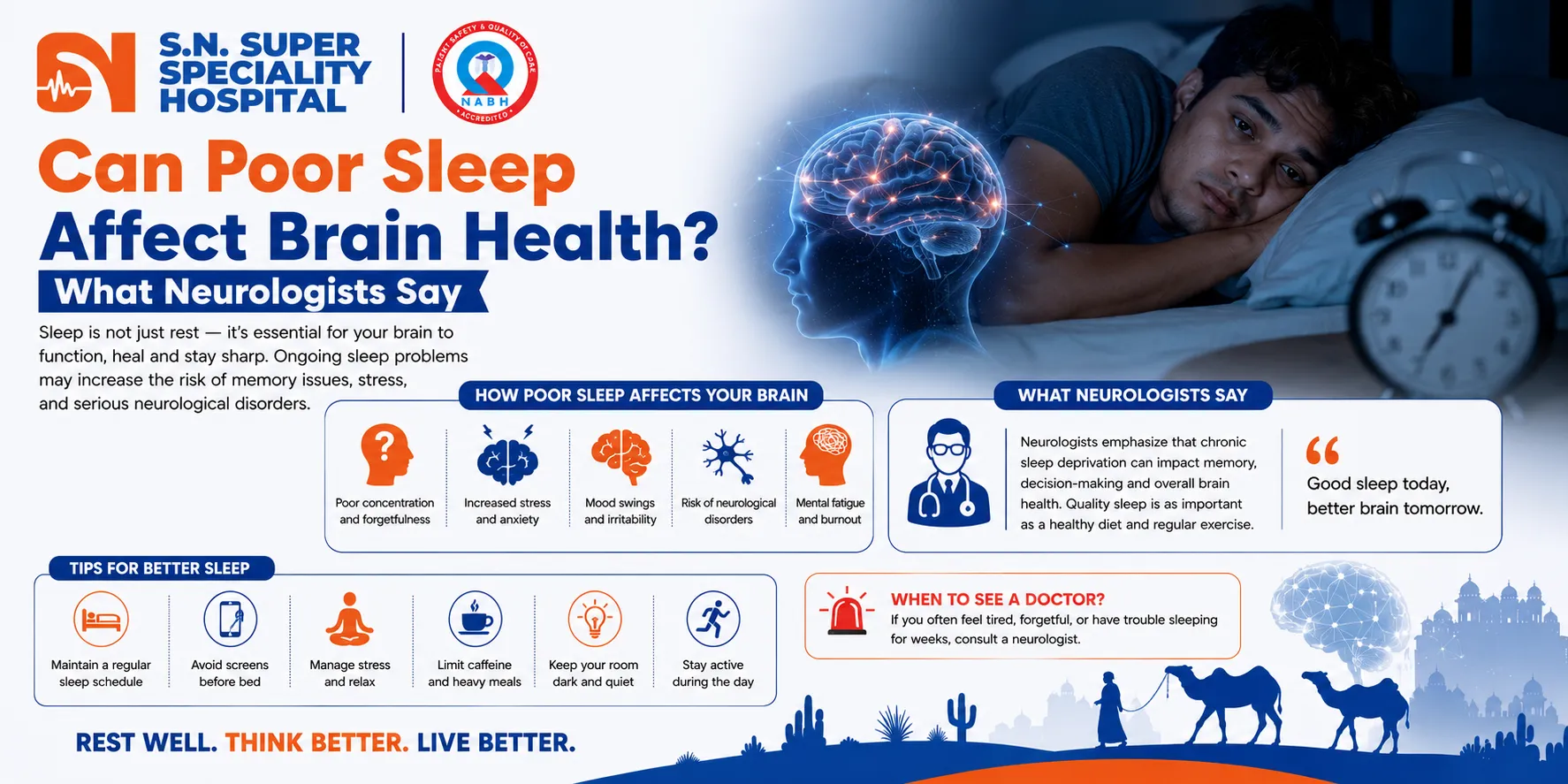
Can Poor Sleep Affect Brain Health? What Neurologists Say
Ask most people what a bad night’s sleep costs them, and they’ll mention a groggy morning or a short temper by lunchtime. Few think about what’s happening inside the skull while they toss and turn. Neurologists have spent the last two decades building a much clearer picture, and it isn’t a comfortable one.
Being tired does not help with chronic poor sleep. It changes how the brain clears waste, consolidates memory, and regulates mood, which is why a neurosurgeon in Sri Ganganagar or a neurologist will often ask about sleep before anything else during a consultation for headaches, memory complaints, or unexplained fatigue.
Sleep used to be treated as downtime, a pause button for the brain. That view has aged badly. Research over the past fifteen years shows sleep is closer to active maintenance work, the kind that has to happen on schedule or the whole system starts to lag.
The Brain’s Overnight Cleanup Crew
During deep sleep, the brain runs something researchers call the glymphatic system, a network that flushes out metabolic waste, including a protein called beta-amyloid. Beta-amyloid buildup is one of the hallmarks of Alzheimer’s disease.
Skip this cleanup often enough, and the waste doesn’t just wait patiently for tomorrow. Studies published in journals like Science and reviewed by bodies including the American Academy of Neurology have found that people with chronic sleep deprivation show higher amyloid accumulation over time, along with a measurably greater risk of cognitive decline later in life.
This doesn’t mean one bad night wrecks your brain. It means the pattern matters. A body that never gets the deep sleep stage it needs is a body that’s quietly falling behind on repairs.
Memory, Learning, and the Sleep Connection
Ask any student who has pulled an all-nighter before an exam. It rarely works the way they hope. Sleep plays a direct role in memory consolidation, the process by which short-term experiences get filed away as long-term memory.
During certain sleep stages, the brain replays and strengthens the neural connections formed during the day. For people already managing memory concerns, whether from age, stress, or an underlying neurological condition, poor sleep can make the problem look worse than it might otherwise be.
Sleep, Stroke, and Vascular Risk
This is where the connection gets harder to ignore. Poor sleep, particularly conditions like obstructive sleep apnea, is linked to higher blood pressure, irregular heart rhythm, and increased stroke risk.
The American Heart Association has flagged disrupted sleep as an independent risk factor for cardiovascular and cerebrovascular disease, sitting alongside more familiar culprits like smoking and high cholesterol.
Sleep apnea is common and frequently goes undiagnosed, especially in India, where snoring is often dismissed as a minor annoyance rather than a medical symptom worth investigating. Patients rarely connect loud snoring or daytime drowsiness with brain health, yet the two are more related than most realise.
Migraines, Seizures, and a Fragile Threshold
For people who live with migraines or epilepsy, sleep isn’t just a comfort issue. It’s a trigger. Irregular sleep patterns lower the seizure threshold in many epilepsy patients, meaning poor sleep can directly increase the frequency of episodes. Migraine sufferers report similar patterns, where both too little and too much sleep can set off an attack.
This is one reason a best neurologist in Sri Ganganagar will often build a sleep history into the first consultation for these conditions. Fixing sleep alone rarely resolves epilepsy or chronic migraine, but ignoring it tends to make treatment harder to manage.
Mood, Mental Health, and the Two-Way Street
The relationship between sleep and mood runs in both directions. Poor sleep worsens anxiety and depression, and anxiety and depression, in turn, make good sleep harder to come by. Neurologically, sleep deprivation affects the amygdala and prefrontal cortex, the regions responsible for emotional regulation, which is part of why everything feels harder after a string of bad nights.
This cycle can be difficult to break without help, particularly when an underlying neurological issue is part of the picture rather than stress alone.
What Helps in Practice
Most sleep advice sounds obvious until you try to follow it consistently. What can make a difference are:
- Trying to sleep and wake at a reasonable time, even on weekends.
- Reduced screen exposure before bed, since blue light delays the release of melatonin.
- Keeping an eye on caffeine consumption and avoiding heavy meals before bed.
- Treating underlying conditions, such as sleep apnea, rather than working around them.
- Seeking evaluation when sleep problems persist for weeks rather than days.
Simple, yes. Easy to stick to, not always. But these habits are the first line of defence long before medication or specialist referral becomes necessary.
When to See a Specialist
Occasional poor sleep after a stressful week is normal and not something to worry about. Persistent insomnia, loud snoring with gasping or pauses in breathing, unexplained memory lapses, or worsening migraines and seizures are different matters. These warrant a proper neurological evaluation rather than another round of over-the-counter sleep aids.
At SN Hospital in Sri Ganganagar, the neurosciences team works through these overlapping issues with patients regularly, combining clinical evaluation with diagnostic imaging where needed to understand whether sleep is a symptom, a cause, or both.
For families across the region who want thorough neurological care without travelling long distances, being recognised as the best hospital in Sri Ganganagar and nearby areas for neurosciences means patients have access to that kind of layered evaluation close to home.
Sleep is often the first thing to slip when life gets busy, and usually the last thing anyone thinks to address when brain health starts to decline. Neurologists are increasingly clear that the two are connected far more closely than most people assume, and treating sleep seriously may be one of the more practical steps toward protecting long-term brain health.
Comments are closed