



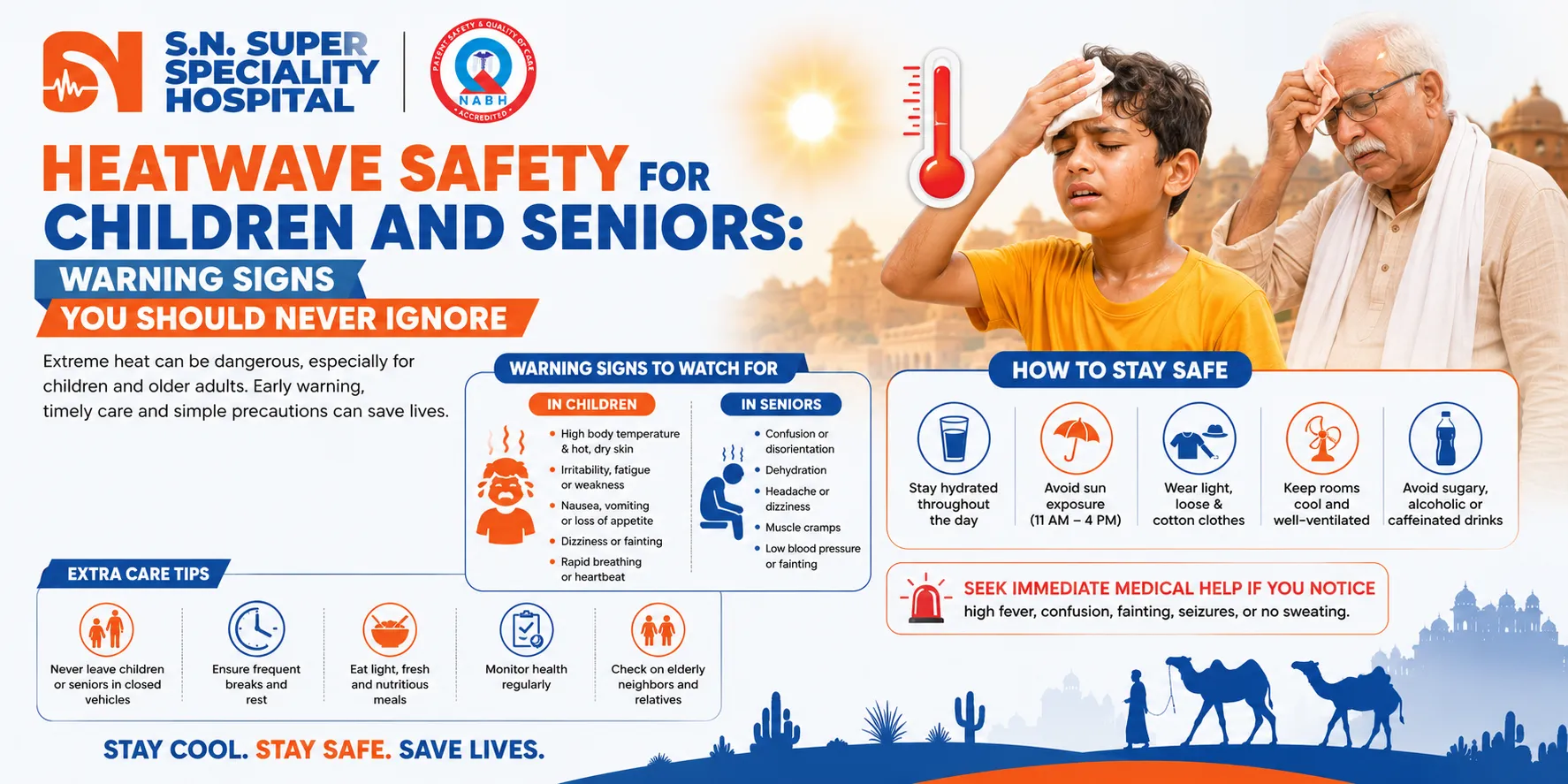
Heatwave Safety for Children and Seniors: Warning Signs You Should Never Ignore
When a heatwave hits, not everyone feels it equally. Children and older adults are the first to struggle. Their bodies handle heat differently, and dehydration can quietly take hold long before anyone notices something is wrong.
Families reaching out to a pediatric neonatologist in Sri Ganganagar during the summer months often bring up the same concerns: fever that won’t settle, poor feeding, unusual weakness, and a general sense that the child just isn’t right. In peak heat, these signs deserve prompt attention.
Heatwaves cause more than discomfort. They lead to heat cramps, dehydration, heat exhaustion, and, at the far end, heat stroke. Babies, school-going children, elderly individuals, and anyone managing diabetes, kidney disease, heart conditions, or blood pressure problems are the most vulnerable.
Why These Two Groups Need More Attention
Children are active, distracted, and often completely unbothered by how hot they feel until the body starts struggling. Babies cannot communicate thirst or discomfort at all. Elderly people frequently have a reduced sense of thirst and may be on medications such as diuretics or blood pressure drugs that increase the risk of dehydration even higher.
During heatwaves in Sri Ganganagar and nearby areas, even staying indoors offers limited protection when rooms are poorly ventilated. Families should not wait for dramatic symptoms before acting.
Early Signs That Something Is Off
Heat stress does not announce itself loudly. A child turns irritable, goes quiet, stops playing, or refuses food. An elderly person mentions a headache, feels tired for no clear reason, or seems a little unsteady.
Watch for:
- Excessive thirst or dry mouth
- Headache and dizziness
- Weakness and nausea
- Heavy sweating
- Less frequent urination or dark yellow urine
- Irritability or unusual fatigue
At this stage, move the person to a cooler space. Offer water, ORS, or coconut water. Avoid sugary drinks and do not force fluids if the person is drowsy or vomiting repeatedly.
Heat Exhaustion: The Body Is Losing Ground
This happens after the body sheds too much water and salt through long sun exposure, outdoor travel, physical work, or simply sitting in a hot room for hours.
Symptoms to recognise:
- Heavy sweating with cold or clammy skin
- Fast heartbeat and muscle cramps
- Vomiting or fainting
- Confusion, particularly in elderly individuals
Children rarely describe these symptoms clearly. They just stop engaging, sleep more, or refuse to eat. If cooling and fluids do not produce improvement fairly quickly, a doctor needs to be involved.
Heat Stroke: This Is an Emergency
Heat stroke can affect the brain, heart, kidneys, and other vital organs within a short window of time.
Signs that need immediate action:
- Very high body temperature
- Confusion or disoriented behaviour
- Seizures or loss of consciousness
- Fast or laboured breathing
- Skin that is hot to the touch, sometimes without sweating
- Severe, sudden weakness
Move the person to a cool room straight away. Remove excess clothing, wipe the body with cool water, and place damp cloths on the neck, armpits, and groin. Then get emergency help without waiting. Critical care specialists in Sri Ganganagar at SN Hospital are equipped to manage serious heat-related complications when urgent intervention is needed.
Caring for Babies Specifically
Babies dehydrate faster than older children. Watch for fewer wet diapers, dry lips, sunken eyes, fast breathing, unusual sleepiness, and reluctance to feed. Any of these in a young infant during summer needs a doctor’s assessment, not a wait-and-watch approach.
Keep babies in cool, well-ventilated rooms. Avoid heavy clothing or blankets. Breastfed babies may need more frequent feeds. Formula-fed babies should follow the doctor’s guidance.
Keeping Elderly Family Members Safer
Older adults need to drink fluids throughout the day without waiting for thirst to register, because by that point, dehydration may already be underway. Stepping out during peak afternoon hours should be avoided during heatwave alerts. Light cotton clothing, shaded rooms, and simple meals help the body cope.
For elderly individuals living alone, someone should check in regularly. Sudden confusion, dizziness, marked weakness, or reduced urine output should never be written off as normal ageing.
Basic Habits That Help
Keep water accessible at home, during travel, and at work. Use ORS when heavy sweating, vomiting, or loose motions are present. Eat light: curd, dal, fresh fruit, and home-cooked food. Avoid stale food, fried snacks, alcohol, and excess tea or coffee. Children should not play outdoors during peak afternoon hours and need regular reminders to drink water even when they are not asking for it.
When to Get Medical Help
Do not delay if a child or elderly person has a fever, persistent vomiting, loose motions, fainting, confusion, severe weakness, poor feeding, reduced urination, or breathing difficulty. Waiting for symptoms to worsen is the most common mistake families make in summer.
Conclusion
Heatwaves are dangerous but not unpredictable. Early recognition and a quick response protect children and seniors from the worst outcomes. SN Hospital provides care for children, elderly patients, emergency cases, and heat-related health concerns across the region. Recognised as the best hospital in Sri Ganganagar, it offers dependable medical care when families need it most.
Comments are closed