



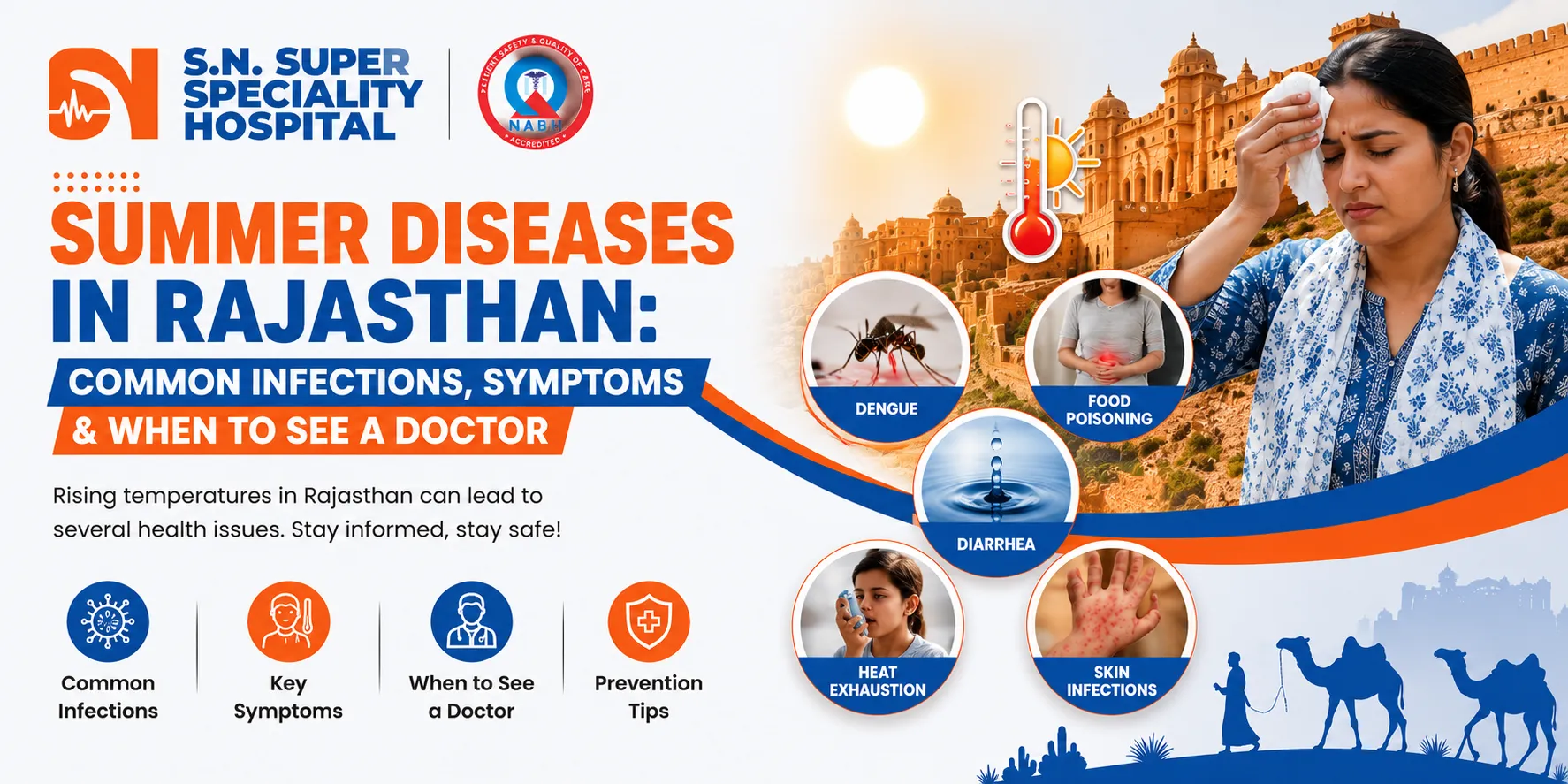
Summer Diseases in Rajasthan: Common Infections, Symptoms & When to See a Doctor
Rajasthan summers are merciless, and no one living here needs to be told that. The heat alone is exhausting. But what makes the season genuinely dangerous is what comes with it: dehydration, dust, poor water quality, and infections that can go from mild to serious within days. What starts as a slight fever or loose motions can turn into something that needs hospitalisation if left untreated for too long.
Children, elderly people, pregnant women, outdoor workers, and those managing diabetes, blood pressure, or heart conditions are at higher risk. The encouraging part is that most summer diseases in Rajasthan are either preventable or treatable, provided the signs are caught early.
Why Summer Breeds Illness
Heat pushes bacteria to multiply faster in food and water. It taxes the immune system, disturbs sleep, kills appetite, and gradually weakens the body’s ability to fight off what it normally would.
Layer that with dust storms, open drains, and water contamination that worsens every year as temperatures rise, and the seasonal disease burden becomes entirely predictable.
Infections That Show Up Every Season
Typhoid
Contaminated water and food are the cause of typhoid. A fever that does not spike and drop but instead builds steadily over days, paired with headache, deep fatigue, and stomach discomfort, should raise suspicion. Typhoid is routinely mistaken for a passing viral illness, and that delay in diagnosis is where things go wrong.
Heat Exhaustion and Heat Stroke
Profuse sweating, lightheadedness, and a feeling of sudden weakness point to heat exhaustion. When the body can no longer regulate its own temperature and sweating stops entirely, heat stroke has set in. That is a medical emergency. A person who is confused, unresponsive, or has hot, dry skin in peak summer heat needs immediate help, not observation.
Food Poisoning and Stomach Infections
Stale food, uncovered street snacks, contaminated dairy, and poorly stored leftovers are behind most of these cases. Cramping, vomiting, loose motions, weakness, and sometimes fever follow within hours of eating. The body loses fluids fast, so hydration becomes the immediate priority. If diarrhoea lasts for more than 48 hours, if there is blood in the stool, or if the fever is high, that is not a situation to manage at home.
Jaundice
Hepatitis A travels through the same routes as most summer infections: dirty water and contaminated food. Yellowing of the eyes and skin, dark-coloured urine, persistent nausea, and fatigue are what to look for. Water quality often becomes bad in summer, which is exactly when cases tend to cluster.
Viral Fever
Body ache, sore throat, mild cough, tiredness, and a fever that does not seem to have a clear cause are typical of seasonal viral fevers. Most cases settle with rest, fluids, and appropriate medication. A fever that holds on beyond two days, however, needs a proper evaluation. SN Hospital, a general medicine hospital in Sri Ganganagar, can help determine whether the fever is viral, bacterial, waterborne, or linked to something else entirely.
Skin Rashes and Fungal Infections
Heat and sweat trapped under tight clothing create the perfect environment for prickly heat, fungal patches, and skin irritation, especially in folds, underarms, feet, and the groin. Loose cotton clothing, regular bathing after sweating, and keeping skin dry go a long way. If a rash starts spreading, becomes painful, or shows signs of pus, a doctor’s input is needed.
Urinary Tract Infections
Summer dehydration is a direct trigger for UTIs, more so in women. The signs are familiar: a burning feeling while urinating, a constant urge to go with very little output, and discomfort in the lower abdomen. Drinking more water eases mild cases, but a confirmed UTI needs antibiotic treatment based on a urine test, not guesswork.
When a Doctor’s Visit Cannot Wait
Stop managing at home and seek medical attention when any of the following are present:
- A fever for more than two days
- Repeated vomiting or persistent loose motions
- Blood in stool
- Severe weakness or sudden dizziness
- Very little or no urination for several hours
- Confusion or loss of consciousness
- Difficulty breathing
- Bad headache alongside fever
- Symptoms in infants, elderly individuals, pregnant women, or diabetic patients
Straightforward Prevention That Works
Drink water consistently through the day, not just when thirst hits. Carry ORS sachets during travel or outdoor work. Eat freshly prepared food and avoid anything left uncovered for hours. Washing hands before and after using the toilet is non-negotiable. Keep drinking water in clean and covered containers. Stay indoors between noon and four in the afternoon wherever possible. Wear light cotton clothes, use a cap or umbrella, and protect your eyes from glare.
Remind children to drink fluids regularly, particularly during outdoor activity.
Conclusion
Managing summer illness comes down to awareness and acting before things worsen. For residents of Sri Ganganagar and nearby areas looking for dependable care this season, SN Hospital, the best hospital in Rajasthan, offers general medicine and specialist services to handle the full range of summer conditions. We have experienced physicians, in-house diagnostics, and round-the-clock emergency support available when it matters most.
Early care is always the easier road. Do not wait for symptoms to make that decision for you.
Comments are closed